Moon Phases and Your Daily Rhythm
October 9, 2026, Friday, 09:00 AM · 5 min readThe only cycle you can watch
Most of astrology is too slow to see. Saturn takes decades to do anything. Pluto takes a lifetime. The Moon is the exception: it runs its whole cycle in 29 and a half days, you can check on it from the kitchen window, and it was the human calendar for thousands of years before anyone thought to count by the Sun. Month and Moon are the same word for a reason.
That makes the lunar cycle the most practical thing astrology has to offer. You do not need a chart to use it, although a chart makes it personal. You need to know roughly where in the loop you are, and what that part of the loop is good for.
The eight phases, in order
New Moon. Sun and Moon together, and the Moon is invisible. The quiet start of things. Energy is low and potential is high, which makes it good for intentions and terrible for launches.
Waxing crescent. A sliver shows up. First steps, early effort, finding out whether the intention survives contact with Monday morning.
First quarter. Half lit and growing. The first friction. Something pushes back and you either adjust the plan or quietly drop it. This is where most resolutions die, and where the real ones get serious.
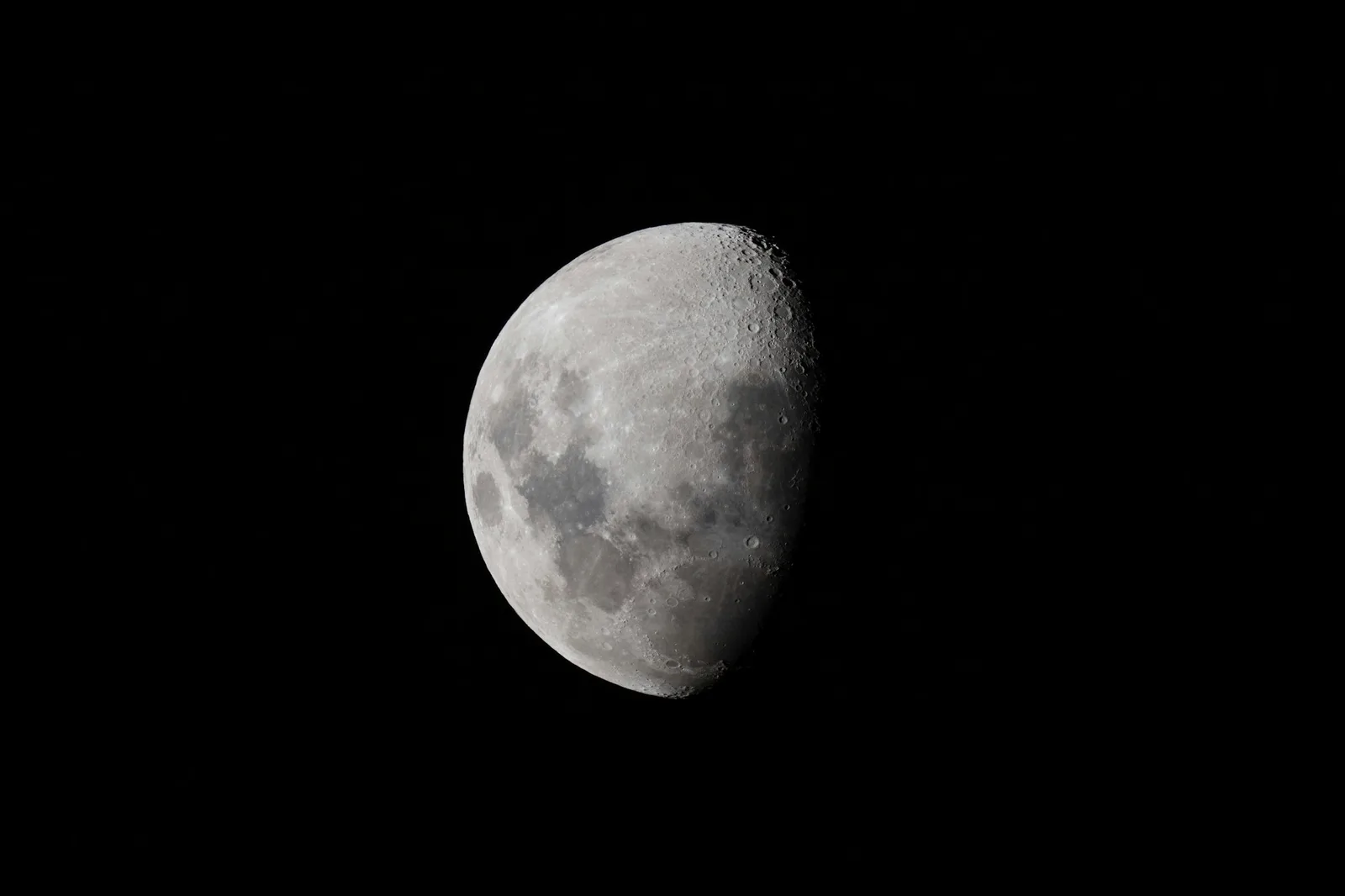
Waxing gibbous. Nearly full. Refining, waiting, the last stretch before you can see the result.
Full Moon. Sun and Moon opposite each other, the whole disc lit. Peak visibility. Things come to a head, feelings sit closer to the surface, outcomes become clear. Good for seeing. Less good for deciding, which is why so many people regret the text they sent on a full Moon.
Waning gibbous. Starting to shrink. Telling people what you learned, gratitude, the slightly tired clarity after a big week.
Last quarter. Half lit and shrinking. The second friction, this time about letting go. Clearing out whatever the full Moon showed you was finished.
Waning crescent, or the dark Moon. The thin end. Rest, review, inbox zero before the next cycle starts whether you are ready or not.
If eight is too many to hold, think of it as two halves: a fortnight of building toward the full Moon, a fortnight of releasing toward the new one.
Why some days land differently
On top of its phase, the Moon changes sign every two to two and a half days, so it visits all twelve in a month, and each one gives the collective mood a slightly different weather. A Moon in Aries is restless and quick to pick a fight. In Taurus it slows down and wants a good lunch. Gemini makes it talkative and scattered. Cancer, tender and inclined to stay home. Leo, warm and a little theatrical. Virgo, tidy and critical of everything including itself. Libra, sociable and unable to pick a restaurant. Scorpio, intense and private. Sagittarius, restless again but in the other direction, wanting distance. Capricorn, practical and slightly stern. Aquarius, detached and full of ideas. Pisces, porous and dreamy and likely to lose its keys.
You have felt every one of these. You just may not have had a name for why Tuesday felt like a different country from Sunday.
The Moon in your own chart
Your natal Moon is whichever sign the Moon was in when you were born. It describes what you need in order to feel safe, how you process emotion, and the kind of comfort you reach for without thinking about it. It is the most private planet in the chart and often the one people recognise themselves in most sharply once they read about it.
Two things follow from it. When the moving Moon passes through your own Moon sign, which happens about once a month, you tend to feel more like yourself. Astrologers call that your lunar return, and it is a good day for asking what you actually want. When the Moon sits in the sign opposite yours, you tend to feel pulled toward other people's needs. Not a bad day, just a day for noticing whose feelings you are carrying around.
Ostrol's daily reading already takes both of these into account, which is why a day marked calm for you can be marked high for someone you live with.
A no-ritual way to live with it
You do not have to light anything. The cycle works just as well as a planning tool.
On the new Moon, write down one thing you want more of this month. One. Not a list.
At the first quarter, check whether you have taken a single concrete step toward it. If not, make the step smaller.
On the full Moon, look at what has become visible, in the project and in your mood. Do not make big decisions that day. Sleep on it first.
At the last quarter, remove one thing. A subscription, a commitment, a conversation you keep rehearsing in the shower.
In the last two dark days, do less on purpose. The next cycle starts whether or not you are rested, and it goes better when you are.
A word about sleep
A few sleep studies have found that people sleep a little less and fall asleep a little later in the nights before a full Moon, even in cities where the sky is washed out by streetlights. The effect is small and nobody fully agrees on why. You do not have to believe in astrology to notice that bright nights are restless nights, and you do not have to disbelieve it to want a good night's sleep. The cycle is simply there, every month, and paying attention to it costs you nothing.