How to Read Your Birth Chart: A Beginner's Guide
October 8, 2026, Thursday, 08:00 AM · 6 min readA photograph of the sky
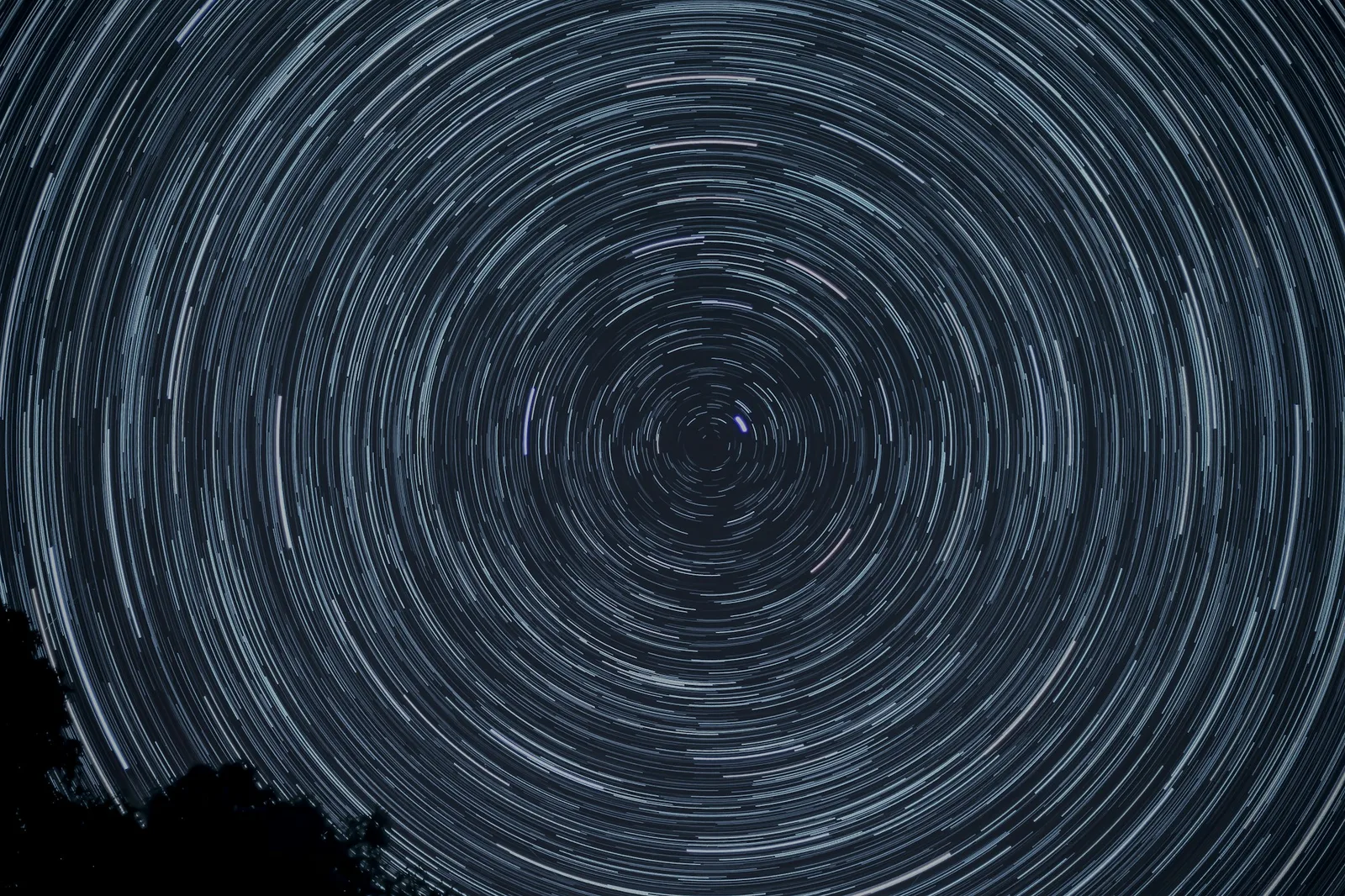
Imagine someone had stood on the roof of the hospital the minute you were born and taken a photo of the whole sky, including the half below the horizon. That photo is your birth chart. Every planet, frozen where it was, seen from that one spot on Earth. Everything astrology says about you specifically, rather than about Scorpios in general, comes out of this single picture.
The first time you see it drawn, it looks like a clock designed by someone who hated you. A wheel, twelve wedges, a scatter of glyphs, lines criss-crossing the middle. But it is built from three layers and a handful of relationships, and once you know the layers you can read any chart at a basic level in an afternoon. I have watched people do it.
Why the birth time is such a big deal
The Sun's sign stays the same all day, which is how newspaper horoscopes get away with it. The frame of the chart does not. The horizon line and the twelve houses turn with the Earth, so the sign rising in the east changes roughly every two hours and the house boundaries shift about a degree every four minutes.
Two babies born the same day in the same city share planets and signs and can have completely different charts, because the frame around those planets has rotated. Without a birth time you can still read the planets, and the Moon's sign is usually knowable. What you lose is the houses and the rising sign, and those are where the chart gets personal. A birth certificate, a hospital record, or your mother's memory of "just before the evening news" are all worth chasing down.
The three layers
Planets are the what. Each one is a function of the psyche. The Sun is identity and the thing you are growing into. The Moon is what you need to feel safe and how you handle feeling. Mercury is how you think and talk. Venus is what you value and how you connect. Mars is how you act and push. Jupiter is where you expand and where you trust too easily. Saturn is where you build, and where you doubt yourself. Uranus, Neptune and Pluto move so slowly that they mostly describe generations, unless one of them happens to sit on a sensitive point in your chart, in which case it describes you.
Signs are the how. A planet in a sign does its job in that sign's style. Mars in Aries acts fast and head-on. Mars in Cancer acts protectively and sideways, and will deny acting at all. The sign never changes what the planet does, only the manner.
Houses are the where. Twelve areas of life, starting from the eastern horizon and going round: self, money, siblings and everyday talk, home, creativity and children, work and health, partnership, shared resources, travel and belief, career, friends and community, and the inner life. A planet in a house tells you where that function shows up most visibly.
Stacked together, a single placement reads like a short sentence. Venus, which is connection, in Capricorn, which is cautious and built to last, in the eleventh house, which is friends and community: someone whose closest bonds form slowly, often through shared work, and then last for decades. You probably know this person.
The big three
If you only ever learn three things about your chart, learn these.
Your Sun sign is the core of your identity, the direction you are growing in. Most people already know it.
Your Moon sign is how you feel, what you need in order to feel safe, who you are at home at eleven at night with nobody watching. For a lot of people it is more recognisable than the Sun.
Your rising sign, the Ascendant, is the sign that was coming up over the eastern horizon when you were born. It is how you approach the world and how the world first sees you, and it sets the whole house system. When your Sun sign has never quite fit, it is almost always because the Moon or the Ascendant is doing the talking.
Aspects, or the lines in the middle
Aspects are the angles between planets, and they are where a chart stops being a list and starts being a story.
A conjunction, zero degrees, means two planets fused together, their functions blending for better and worse. An opposition, 180 degrees, is two planets facing each other, a tension you tend to live out through other people. A square, 90 degrees, is friction; the two functions want different things, and the discomfort of that is where most people's drive comes from. A trine, 120 degrees, is ease, two functions cooperating without effort, pleasant and very easy to take for granted. A sextile, 60 degrees, is an opening that pays off when you put a little work in.
A chart full of squares is not a worse chart than one full of trines. It is a more motivated one. Some of the most comfortable charts I have seen belong to people who never quite got round to anything.
How to read one, in five steps
Start with the big three. Say them as a sentence: I am becoming this, I need that, I meet the world as this other thing.
Find the chart ruler. That is the planet that rules your rising sign. Its sign and house tell you where your life keeps steering itself.
Look for emphasis. Three or more planets in one sign or house is called a stellium and it will dominate everything else. Look at what is missing too. No planets in water signs says something about a person.
Read the personal planets, Mercury, Venus and Mars, by sign and house. This is how you think, love and act on an ordinary Wednesday.
Then trace the tightest aspects. The closer to exact, the stronger. Two or three tight aspects usually explain the central tension of a personality better than anything else on the page.
Mistakes everyone makes first
Reading each placement on its own, as if the chart were twelve separate horoscopes stapled together.
Treating the difficult placements as bad news. Saturn on the Moon is not a curse. It is a person who feels deeply and shows it carefully, and who is often the one everyone else leans on.
Skipping the houses because they are harder to learn. The houses are exactly where astrology stops being generic.
Making the Sun sign carry everything. It is one planet out of ten.
Expecting a verdict. The chart is a vocabulary for describing a person, not a sentence passed on one.
What to do with it
Ostrol draws the chart from your birth data and writes the first interpretation for you, so you do not need to memorise the glyphs before you get anything useful out of it. But the chart rewards your own attention over years, not days. Keep it somewhere you will see it. When something in your life repeats, a pattern at work or in love, go and find which planet, sign and house that pattern lives in. The chart will not tell you what to do. What it does, with slightly uncomfortable accuracy, is tell you what you are already doing.